
Author: FACE

The Holsteiner Lebensraum Project aims to restore the ecological connectivity of the Kreis Segeberg Region (North Germany). Species and habitats became fragmented mainly due to the building of two highways. One of the main objectives was to develop the Holsteiner Lebensraum Korridore in conjunction with a range of partners, including the Kreis Segeberg eV hunters. Several actions are set up at different scales and for different habitats, including: The construction of a green bridge over the highway to reconnect the forest. Deer and...

FACE supports the appeal to gather donations for the emergency monitoring of waterbirds in Southeastern Europe launched by Wetlands International. Wetlands International manages the Waterbird Fund - established after the invitation of the UNEP African-Eurasian Waterbird Agreement (AEWA) and the Ramsar Convention on Wetlands - and set up to strengthen the monitoring and conservation of waterbirds in the context of the 51st International Waterbird Census. Monitoring – long-term, repeated data collection – is the foundation for managing and understanding wetlands and...

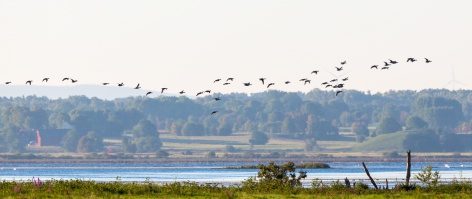
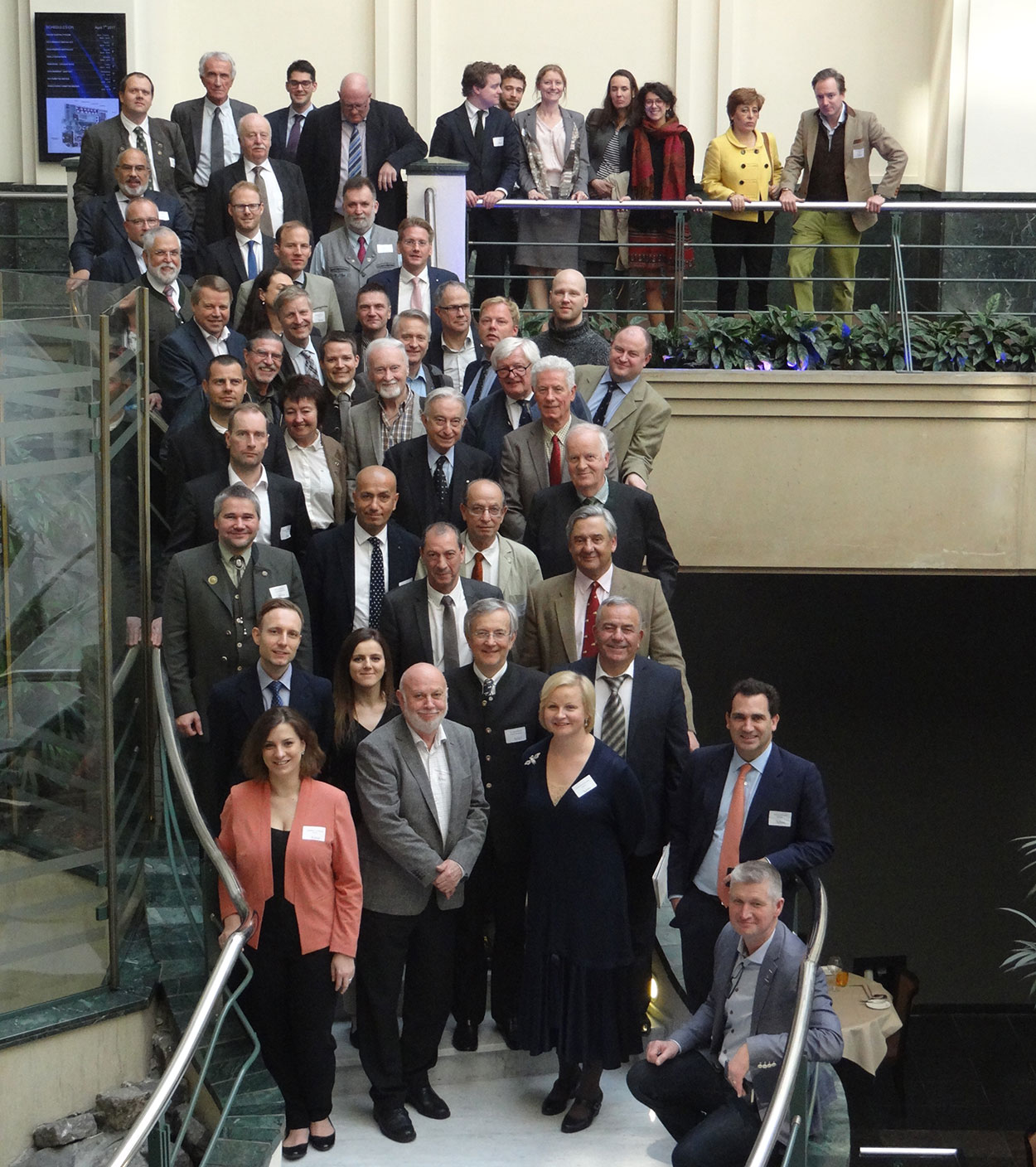
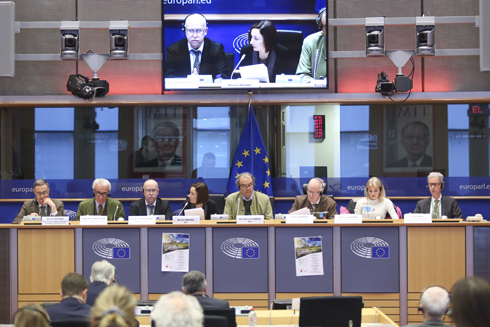
Strasbourg, 17 January 2017 – The European Parliament Intergroup “Biodiversity, Hunting, Countryside” hosted the debate “How to Manage Overabundant Species: The Example of Goose Management” at the European Parliament in Strasbourg. The debate had as its main focus how so called “adaptive harvest management” may have advantages over traditional approaches in the conservation and management of Europe’s goose populations. It was organised by the Federation of Associations for Hunting & Conservation of the EU (FACE), chaired by MEP Karl-Heinz Florenz,...

On 17th January 2017, the European Parliament Intergroup “Biodiversity, Hunting, Countryside” will host a debate entitled: “How to Manage Overabundant Species: The Example of Goose Management” at the European Parliament in Strasbourg. The meeting will discuss how adaptive harvest management can inform the conservation and management of Europe’s goose populations, in particular, for abundant and increasing populations of geese. The concept of adaptive harvest management in Europe emerged recently from the AEWA Guidelines on Sustainable Harvest of Migratory Waterbirds and work...

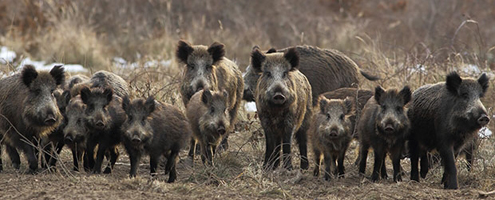
The European Union (EU) Regulation on Invasive Alien Species (IAS), which established the first EU list of IAS, came into force in July 2016. The list currently comprises 37 species (23 animals and 14 plants) considered to have potential adverse impacts across the EU. CONSEQUENCES OF THE LIST This Regulation sets out the restrictions and measures that will now apply to the species on the Union list on keeping, importing, selling, breeding and growing. Among the 23 animal species on the list, four...

The Diana Club of the Polish Hunting Association (Polski Związek Łowiecki) was created in March 2014 in order to improve the image of hunting in Poland, exchange hunting experiences and elaborate on educational activities from different perspectives. It has 141 members and represents almost 3% out of the total number of active women hunters in Poland (there are currently 3244 women hunters in this country). The members of the Diana Club participate in shooting competitions and hunting dog trials, but they...

The position of the UNEP/CMS/FAO Co-Convened Scientific Task Force on Avian Influenza and Wild Birds has been published. Hunters as watchdogs for the health of wildlife: 7.000.000 hunters in Europe play a key role in monitoring the health status of our wildlife, in particular, for reporting potential cases of avian flu. As avian flu is spreading across Europe, hunters should remain alert and scale-up surveillance. Report any suspected cases (of sick or dead birds) to national authorities. Birds infected may die suddenly or...

FACE attended the 1st Meeting of the AEWA European Goose Management Platform in Kristianstad, Sweden from 13-16 December 2016. This process marks the beginning of a more coordinated and science-based approach towards the conservation and sustainable use of goose populations within Europe. The proposed structure of the European Goose Management Platform (EGMP) will require an AEWA-led coordination unit, a data centre and participation by multiple countries and representative organisations, including FACE. This management structure will ensure an internationally coordinated decision-making process. The...

This wetland restoration project takes place on a hunter’s 30 ha landholding in Flanders (Belgium). The site forms part of a Special Area of Conservation (SAC) under Natura 2000 and the objective is it to restore an Annex I habitat; an alluvial forest with Alder (Alnus glutinosa) and Ash (Fraxinus excelsior). Between 2012 and 2013, with the financial support of Agentschap voor Natuur en Bos (Agency for Nature and Forest) and Natura 2000 subsidies combined with hunters’ assistance in the field,...

On the 7 December 2016, EU Commissioners confirmed the next steps of the Fitness Check of the Birds and Habitats Directives. Thus far, the extensive consultation process has pointed to the need for better implementation, increased funding for nature conservation, and fully addressing the drivers of biodiversity loss in the wider countryside. On the basis of today’s debate, the European Commission will develop an implementation Action Plan to improve implementation of the Birds and Habitats Directives. This Action Plan will likely contain...

Between 15-18th of November 2016, FACE attended the 36th meeting of the Standing Committee of the Bern Convention in Strasbourg. This year, the focus of the meeting was on the outcomes of the 2016 meetings and activities, in particular, the issue of bird conservation, the fight against invasive alien species, the relationship between biodiversity and climate change, and the management of protected areas. Regarding the North American Mink, the Bern Convention now recommends that Contracting Parties: “Carry out national campaigns aimed to...

FACE is currently attending the 36th meeting of the Standing Committee of the Bern Convention, which runs from the 15th to the 18th November 2016. The Convention on the Conservation of European Wildlife and Natural Habitats (or Bern Convention) is the first international agreement dedicated to nature conservation, covering most of Europe and some African countries (50 states in total). Government representatives and organisations meet once a year at the Standing Committee meeting in Strasbourg to talk about environment concerns and...

The European Federation for Hunting and Conservation (FACE), the International Council for Game and Wildlife Conservation (CIC), and the European Landowners Organisation (ELO) condemn the recent decision of the Environmental Minister of Romania to unilaterally suspend evidence-based management of large carnivores. Large carnivores represent one of Europe’s greatest conservation challenges. However, the Carpathian Mountains boast one of the largest and densest large carnivore populations in the western world—including Europe and North America. This widely acclaimed conservation success story demonstrates that decisions...

The Hunters’ Federation of San Marino has become the 36 Full Member of FACE, the European Federation of Associations for Hunting and Conservation, the largest democratically representative body for hunters in the world and one of the largest European civil society organisations. The 50th General Assembly of FACE has unanimously welcomed San Marino as new Full member. With 2.000 hunters and a population of 33.000 San Marino has the highest density of hunters in Europe with 6% of its citizens holding...

The document “Hunting & Conservation of Wild Birds in the EU” is a guidance document for European and national policy makers on the implementation and interpretation of the Birds Directive in relation to hunting. This “White Paper” was developed by the European Association for Regional Hunting Traditions (AECT) in close cooperation with FACE who adopted it on 28 September 2016. It assesses of the impact of the Birds Directive on sustainable bird hunting practices in Europe, and in particular on the...

The publication, which covers June 2014 – October 2015, outlines the background and key activities of FACE’s working areas: nature conservation, wildlife conservation, International agreements, animal welfare & health, firearms & ammunition, and hunting methods & culture. One of the most testing challenges that the FACE Annual Report 2015 refers to is the Fitness Check of the Nature Directives, a process carried out by the European Commission aimed at assessing whether or not the Birds and Habitats Directives are fit for...

In addition to the direct economic contribution (16 Billion Euros), hunters’ voluntary work to protect and manage species and habitats also contributes to the development of Europe’s rural areas by providing employment, increasing the social fabric of rural communities, and transmitting cultural identity and traditions. During the conference “The Economic Value of Hunting in the EU” held on 27th September 2016 at the European Parliament, FACE explained that hunting is worth 16 billion Euros for the European economy. Europe’s 7 million...

This manual, which is now available on the FAO website, provides both technical and operational guidance on approaches and practices adopted by countries where regulated or sport hunting is conducted. The aim is to join forces to sustainably manage wildlife, notably by deriving benefits from wildlife to support rural livelihoods, and contribute to food security and national/local economies The social and economic benefits derived from sustainable use, including revenues from trophy hunting, provides sustainable incentives for local people to conserve wildlife....

For the past six months, FACE and its Members worked tirelessly on an IUCN motion, which was originally designed to ban all lead ammunition over all habitats, including for Olympic clay shooting disciplines. Last week, the motion was put to the floor of the IUCN World Conservation Congress (WCC) in Hawaii (1-10 September 2016). Prior to the vote at the IUCN WCC, there were three intense meetings with a range of IUCN State, Government and NGO Members. The FACE position was to keep...

The conference, organized by MEP Karl-Heinz Florenz, President of the Hunting Intergroup and MEP Renata Briano, Vice-President, in cooperation with FACE, will take place on 27th September at the European Parliament. Jyrki Katainen, Vice President of the European Commission, will participate with a keynote. Hunting is a popular activity throughout Europe and plays an important conservation, economic and cultural role within society. During this European Parliament Intergroup “Biodiversity, Hunting, Countryside” Conference, we will explore the various economic dimensions of hunting in...

FACE is putting a special focus on women hunters to learn more about their motivations, challenges and views. Here’s a snapshot from Esperanza Vielva in Spain. Esperanza Vielva, 26, discovered hunting only six years ago, in 2010. She has since become passionate about hunting dogs and everything else related to hunting. She states: “Since my first contact with hunting, I must say that I got hooked because of the nerves and the emotion of the activity”. Esperanza studied Law in Madrid but...

There are many alien (non-native) species in Europe, which can be very useful (such as the beloved potato), however, 10-15% of these alien species are considered “invasive”. Invasive Alien Species (IAS) are often referred to as species of non-native animals or plants, which generate serious negative effects on the environment, economy or even human health. For many decades, much attention has been paid to this problem at EU level with the publication of strategies, codes of conduct and new Regulations to...

Wetlands provide countless benefits or “ecosystem services”, which range from supplying freshwater, food and biodiversity, to flood control, groundwater recharge, and climate change mitigation. Throughout Europe, wetlands continue to decline in area and quantity despite numerous policy and legal targets to halt their decline[1]. The main causes of wetland loss include land use change to forestry and agriculture, urbanisation, invasive alien species and climate change. Hunting and wetland conservation Of the 208 projects currently listed in the FACE Biodiversity Manifesto, 90 are active...

At the meeting, Government representatives and a range of other stakeholders worked on developing a comprehensive programme of work for the Task Force until 2020. The MIKT adopts a zero tolerance approach to illegal killing, trapping and trade of migratory birds (IKB). For this to be successful, it requires the full and proactive support at national level of all stakeholders. FACE has a long-standing zero tolerance policy on wildlife crime including illegal killing, as it is simply not hunting. Dr. David...

The vote of the IMCO Committee took into account the concerns brought forward by FACE and considerably improved the proposal of the European Commission giving a clear mandate to the European Parliament in the upcoming negotiations with the Commission and the Council. The European Parliament - IMCO Committee on the Internal Market and Consumer Protection - voted today on the revision of Directive 91/477 CEE on control of the acquisition and possession of weapons, adopting the text that will be part...

Stay informed, subscribe to the FACE Newsletter
🌎 🇬🇧