

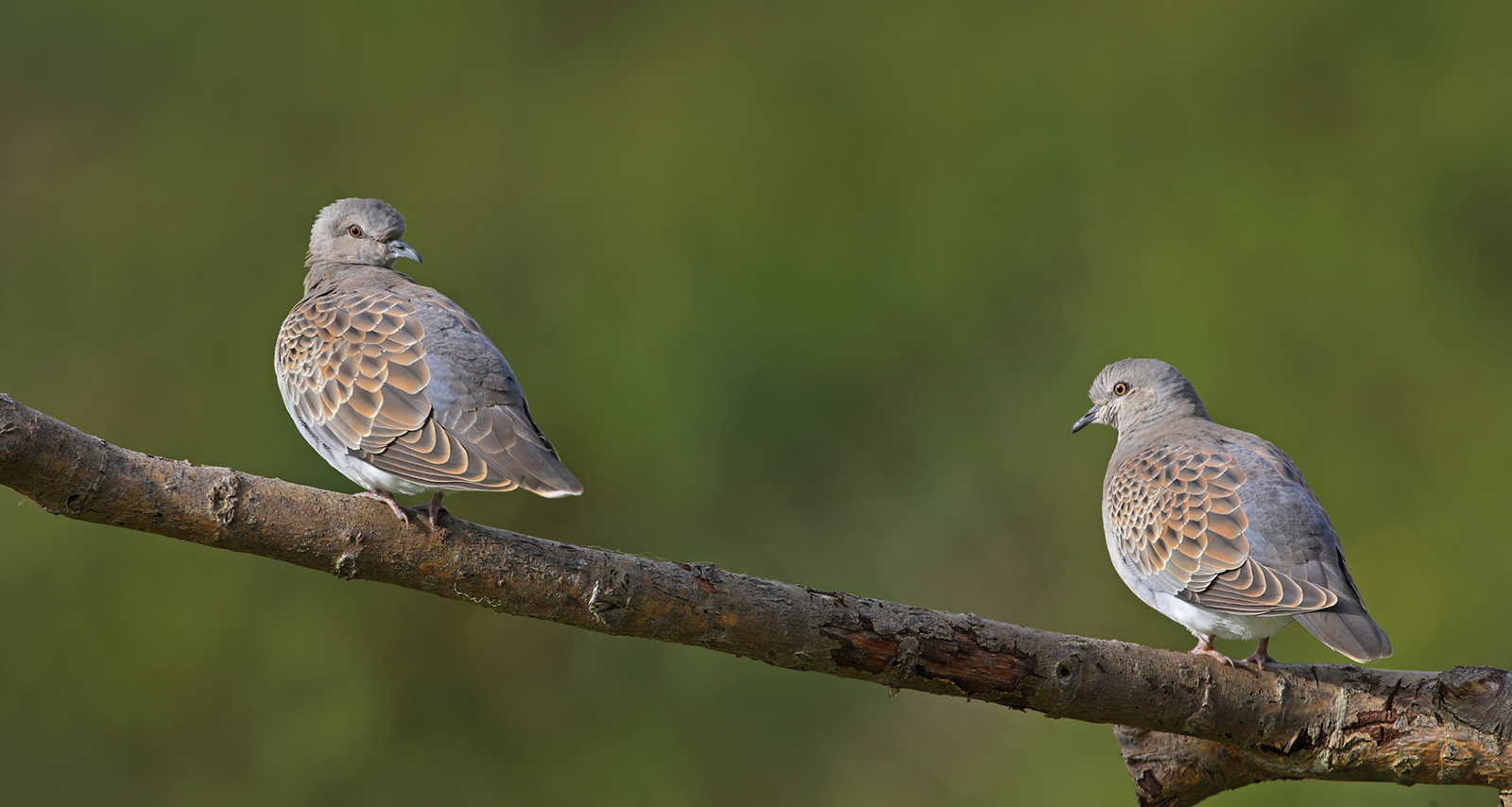
18 Jul 2026 FACE Turtle Dove Report 2026
Since its start in 2021, the EU Turtle Dove Adaptive Harvest Management (AHM) is now in its 6th year of implementation.
At this stage, reflecting back on the achievements highlights significant progress over the years.
First, hunting has been reduced by 90% across both European flyways, to a level that is identified as sustainable, thereby virtually eliminating the potential threat posed by harvest.
FACE · July 2026
Turtle Dove
Report 2026
The Western flyway population continues to rise. In the Central/Eastern flyway, harvest is down by almost 90%.
Second, all Member States are implementing strict hunting quotas and have developed tools to accurately and timely report harvest, in order to follow the progress towards the quota and to close the Turtle Dove hunting season when reached. This represents a significant achievement, paving the way for real-time harvest reporting for other huntable species. This is complimented by extensive data on controls in the field showing very high compliance.
The Turtle Dove is increasing in the Western flyway, and, although still decreasing, signs of stability are visible in the Central/Eastern flyway.
In the Central/Eastern flyway, the absence of increase following the drastic reduction in harvest should serve as a trigger to look for other factors than hunting driving the population decrease. New research shows that breeding densities have increased recently and that a good productivity is achieved in Bulgaria. The situation could be different in other countries, the assessment of national level trends could shed some light in the population dynamics in this flyway.
This report 2026 provides detail on this year’s update in the Turtle Dove AHM, its achievements so far, and ongoing progress.