
05 Nov 2026 FACE Baltic Regional Meeting brings hunters together in Lithuania
From 3 to 5 November, representatives of hunting organisations from Latvia, Lithuania and Estonia met in Lithuania to discuss regional priorities and exchange experience. Hosted by the Lithuanian Hunters’ and Anglers’ Association, the FACE Baltic Regional Meeting covered large carnivore management, nature restoration and digital hunting systems. Visits to a European bison centre and the Čepkeliai wetland brought the discussions into the field.
Regional meetings help FACE connect European policy with the experiences of its Members. The Baltic countries share many habitats and wildlife populations, while their administrative systems and approaches to hunting differ. Comparing those approaches allows Members to learn from one another and identify issues that need joint representation at European level.
For wildlife that moves across borders, this cooperation is particularly relevant. Changes in populations, distribution and human–wildlife conflicts in one country can have implications for its neighbours.
Hunting culture and research in Kaunas
The meeting began on 3 November, Saint Hubert’s Day, when hunting communities across Europe honour their patron saint. Participants had the opportunity to join celebrations in Kaunas organised by the Lithuanian Hunters’ and Anglers’ Association.
A procession with hunting club banners, a church service and a shared evening brought hunters and their families together. The celebration offered an opportunity to experience Lithuania’s hunting culture and the customs that communities pass between generations.
The programme also included visits to the Tadas Ivanauskas Zoological Museum and the Hunting Research Laboratory. These visits provided a setting for discussing the relationship between research, wildlife management and public education.
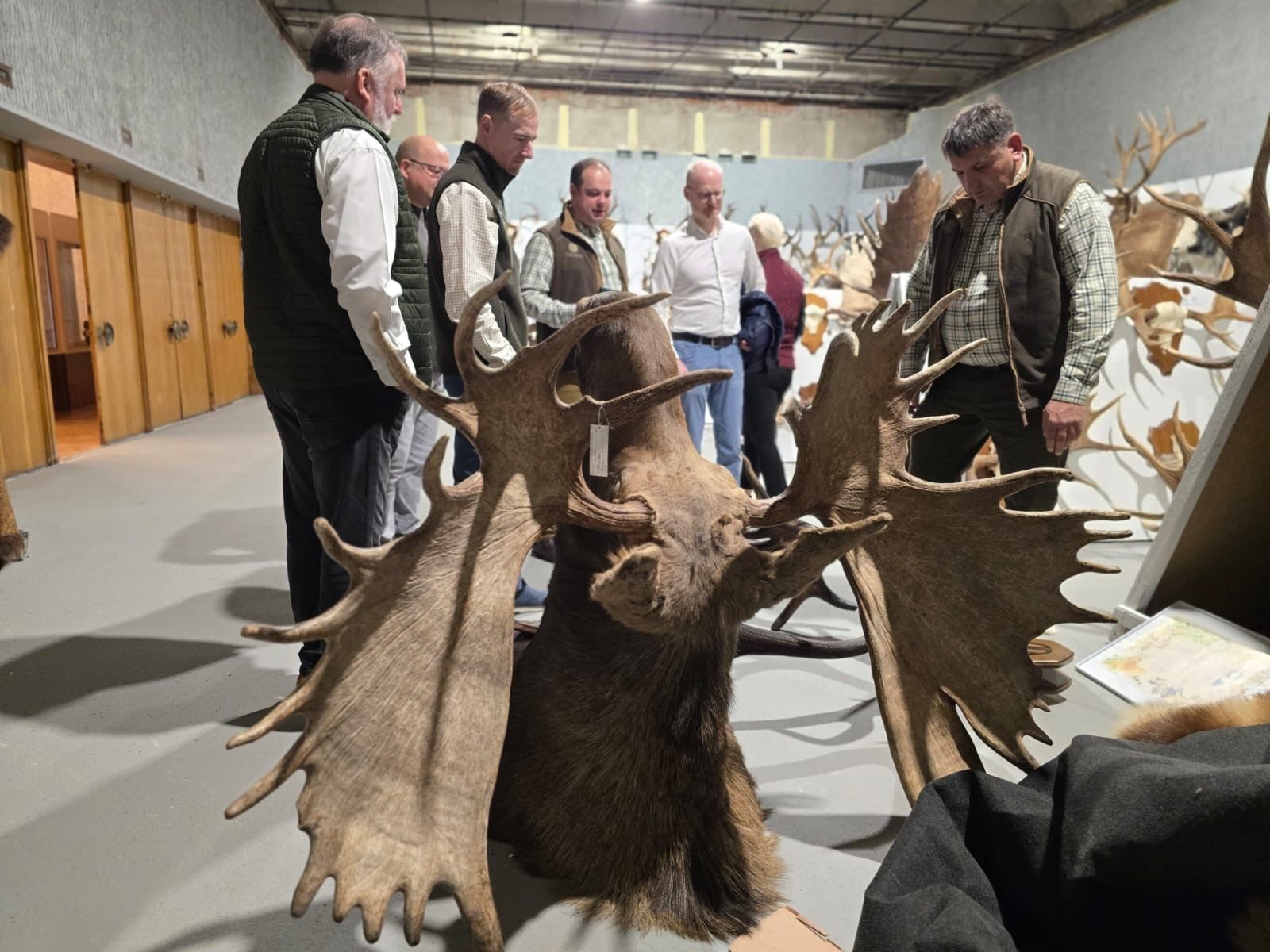
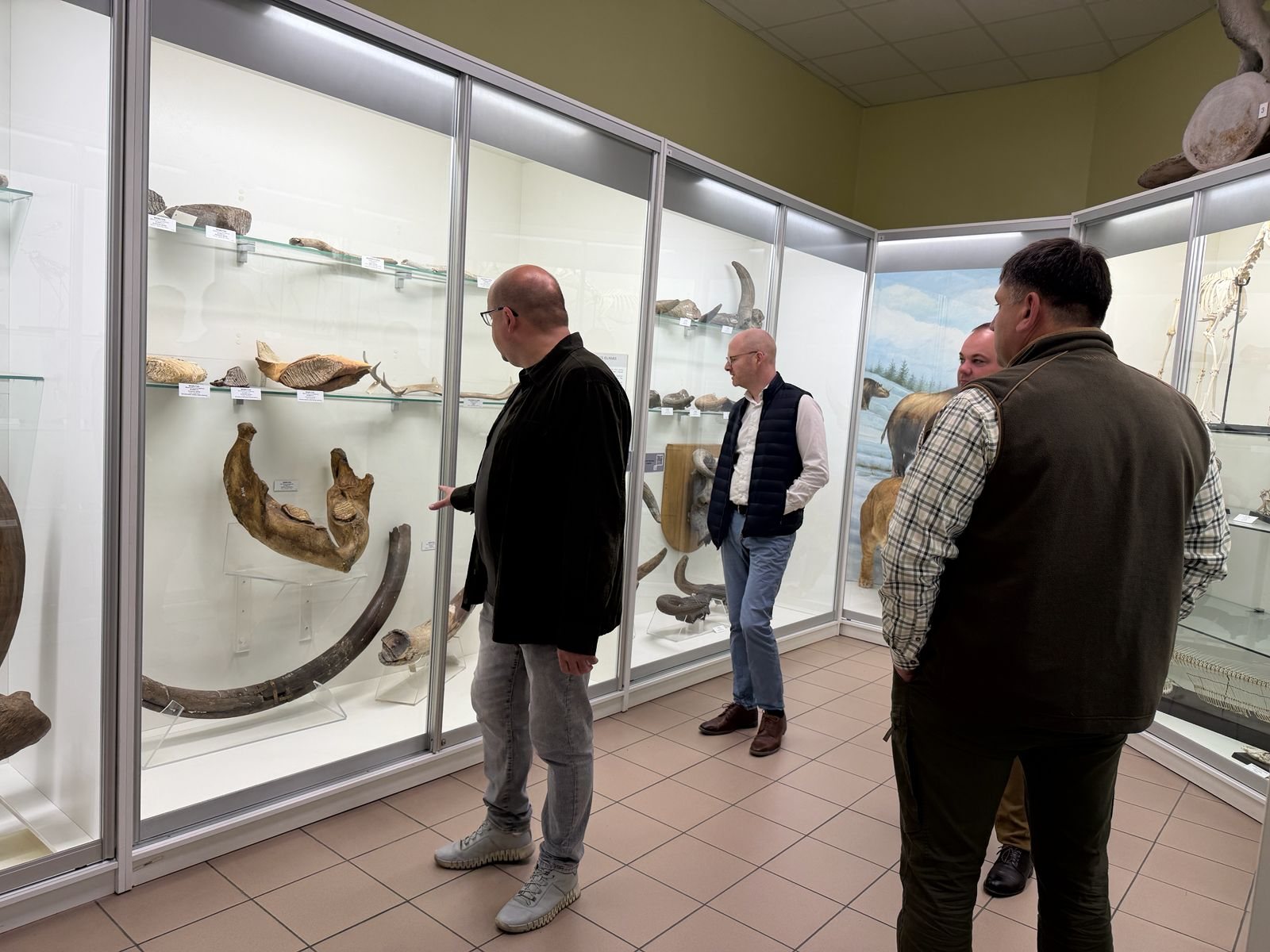
Visits to the Tadas Ivanauskas Zoological Museum and the Hunting Research Laboratory in Kaunas
Brown bears and the responsibilities of responding to conflicts
Brown bear management was an important topic. FACE Vice-President Linda Dombrovska, representing the Latvian Hunters’ Association, presented the situation in Latvia, where bear numbers have increased and repeated visits to rural properties have raised questions about how authorities respond.
Latvian research institute Silava estimated that approximately 190 bears were present in Latvia during the 2025 monitoring season. Bears remain strictly protected, and removing a problem individual requires a specific authorisation.
The Latvian examples illustrated the difficulties that can arise when a bear moves between properties. An authorisation targeting a particular animal and location must operate alongside a response system capable of assessing developments elsewhere.
The discussion also addressed the position of hunters whom authorities ask to assist. Clear written instructions, defined responsibilities and coordination between the competent authorities are essential when hunters take part in a public-safety response.
Public information is another important part of managing these situations. Residents and hunting teams need accessible guidance on reporting encounters and recognising when a situation requires an urgent response. Comparing Baltic experience helps Members examine how monitoring, authorisations and communication work together.
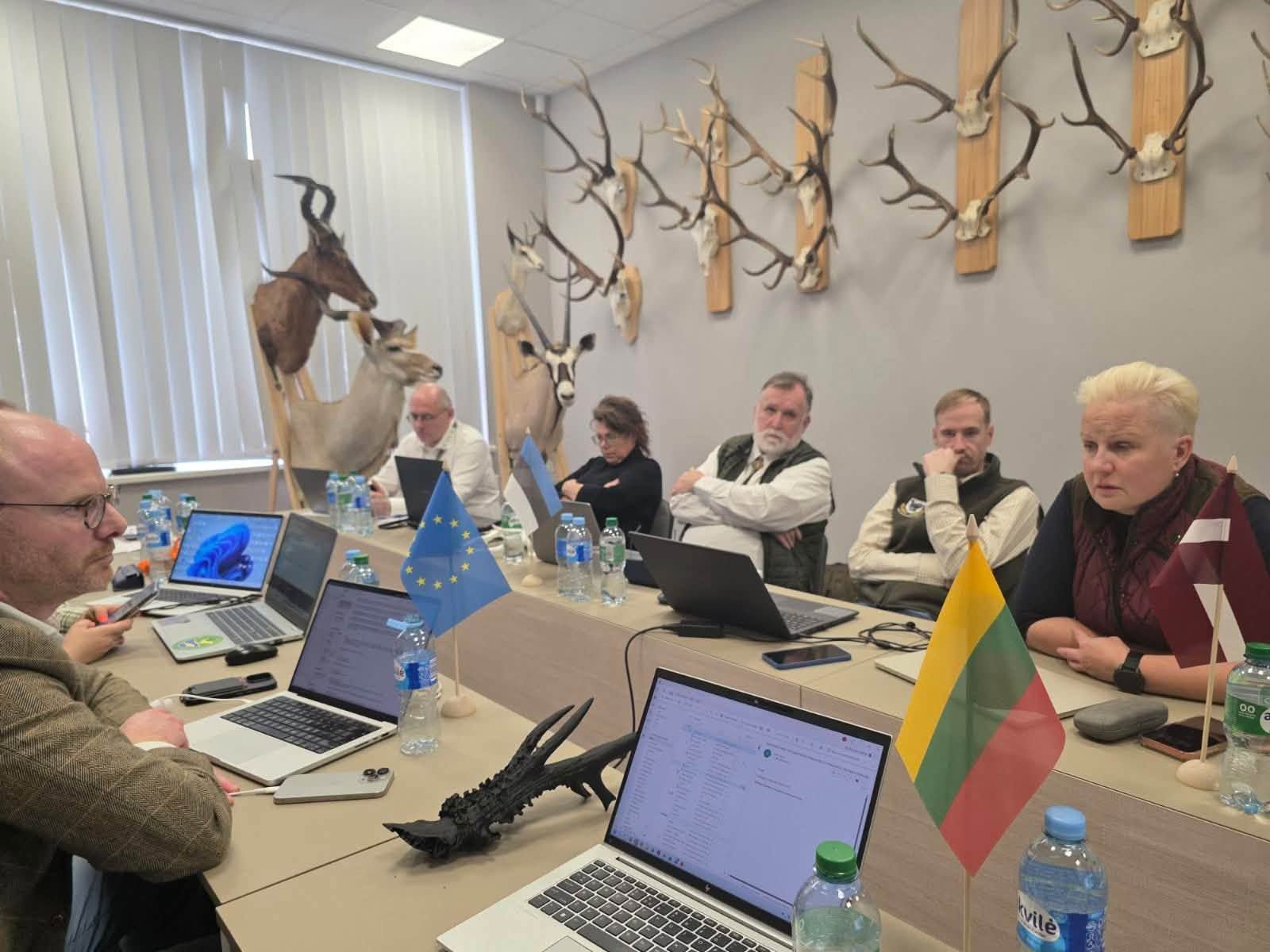
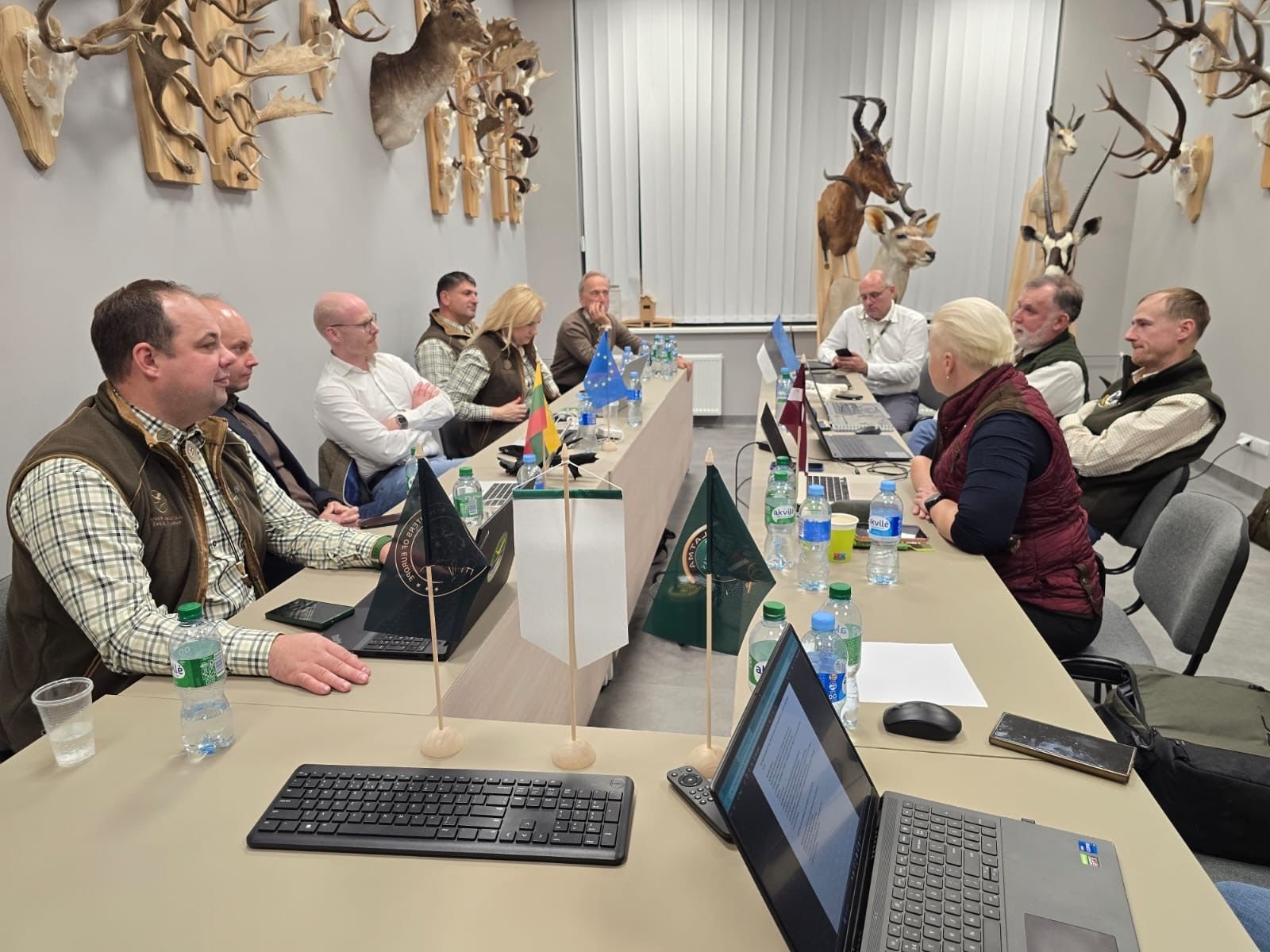
Members from Latvia, Lithuania and Estonia exchanging experience during the meeting
Hunters’ involvement in nature restoration
Linda Dombrovska also introduced a discussion on the EU Nature Restoration Regulation and the involvement of hunting organisations in its implementation.
National Restoration Plans will shape decisions about where restoration takes place and which measures receive support. For hunters, these decisions matter because habitat quality influences the feeding, breeding and shelter available to wildlife, including huntable species.
Hunting organisations can contribute local knowledge, long-term observations and established relationships with landowners. Their involvement is particularly valuable when measures require continuing management after the initial restoration work.
The exchange focused on practical questions. How are hunting organisations participating in national planning? Which projects could they help deliver? Who will maintain restored areas, and how will that work be funded?
For FACE, meaningful involvement of hunters and other land managers is central to turning restoration objectives into sustained improvements on the ground.
Representation, governance and digital hunting systems
FACE Secretary General David Scallan presented FACE’s strategy, providing an opportunity to discuss how Baltic priorities feed into the organisation’s European work.
Participants exchanged experience on representation models and organisational governance. Maintaining contact with local hunting communities helps national associations identify problems, gather supporting evidence and prepare proposals for public authorities. Sharing experience across countries can strengthen that work.
Digital hunting systems were also on the agenda. These systems increasingly support reporting and communication between hunters and authorities. Their usefulness depends on reliable operation in field conditions, including areas with limited connectivity, and clear procedures when technical problems occur.
The discussion connected usability with data quality. Information supplied by hunters should support wildlife management decisions and help explain their basis. Members also exchanged experience on regulatory issues and projects, including opportunities for cooperation.
European bison restoration in Dzūkija
On 5 November, participants travelled to Varėna district to visit the Stėgaliai European bison enclosure in Dzūkija National Park.
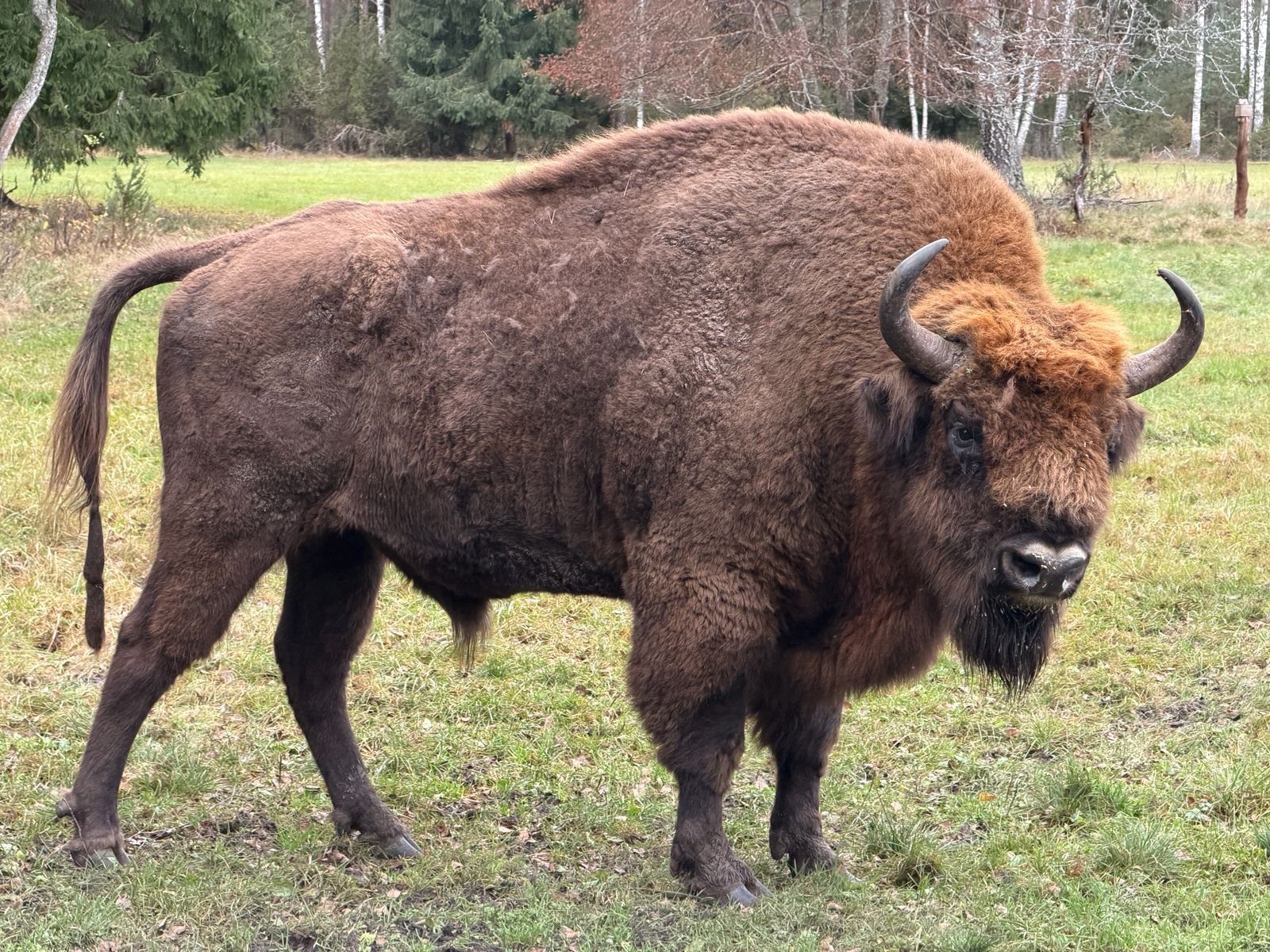
The centre forms part of Lithuania’s work to restore and manage European bison. Its enclosure provides space for animals to adapt following relocation, while a free-ranging herd has also been established in the region.
The visit brought attention to the responsibilities that accompany species recovery. Suitable habitat and opportunities for animals to move must be considered alongside their potential effects on agriculture and neighbouring communities.
This experience is relevant beyond Lithuania. European bison have also been recorded in the wild in Latvia, where the Nature Conservation Agency recognises their arrival from neighbouring countries as a possible route for the species’ return. Regional exchange can help improve knowledge about these animals and prepare for questions arising from their presence.
Wetland conservation at Čepkeliai
The field programme continued with a visit to the Čepkeliai educational trail. Čepkeliai is Lithuania’s largest raised bog, protected within a reserve that includes lakes, forest islands and surrounding woodland.
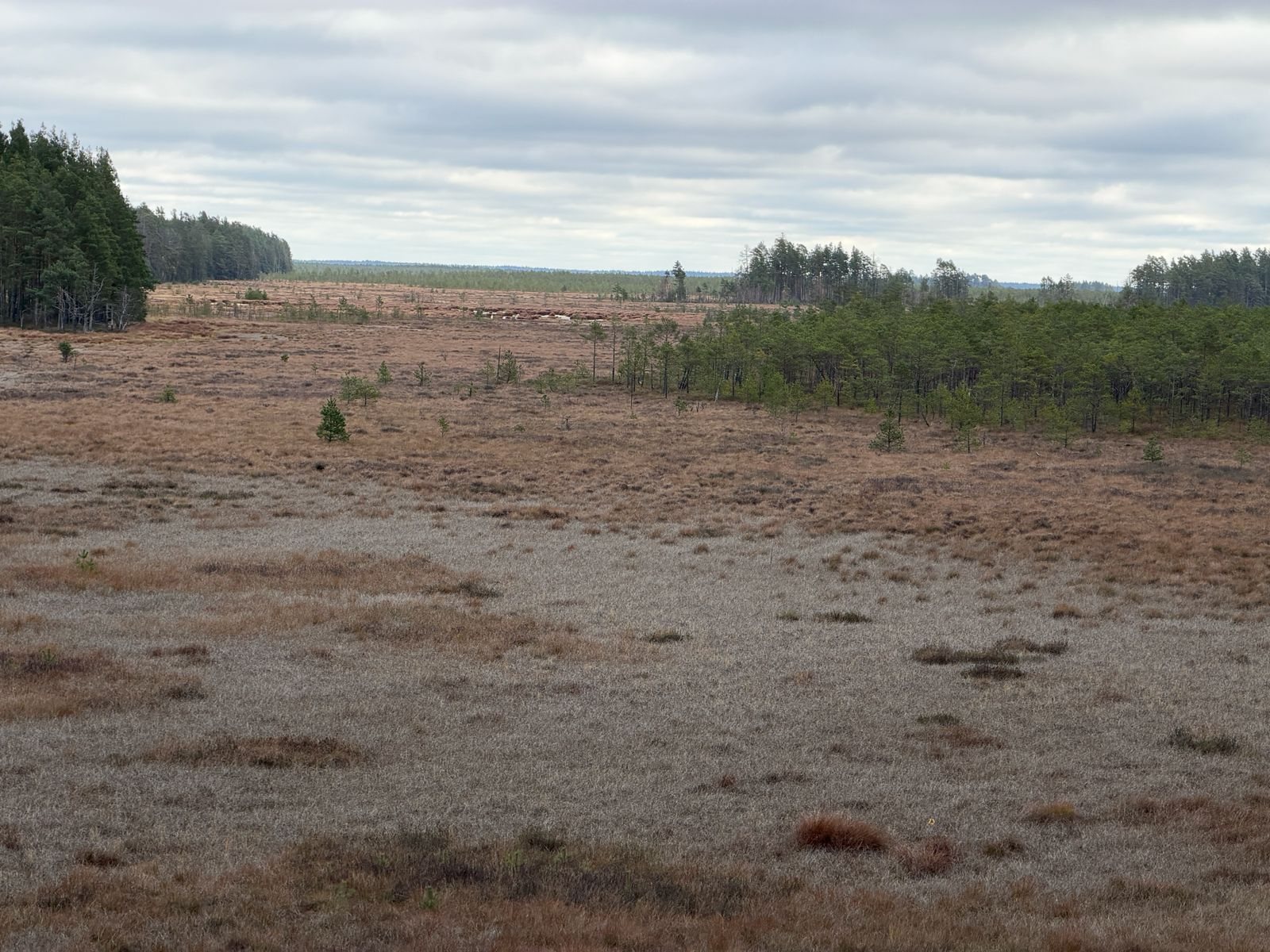
The visit provided a further perspective on the meeting’s nature restoration discussion. Maintaining the conditions that support wildlife requires attention to the functioning of entire habitats. In a raised bog, the water regime is fundamental to the vegetation and species that depend on it.
Together, the bison and wetland visits showed different aspects of conservation work, from restoring a large herbivore population to safeguarding a sensitive ecosystem.
FACE thanks the Lithuanian Hunters’ and Anglers’ Association for hosting the meeting and all participating Members for their contributions. The exchanges will support continued Baltic cooperation and bring regional experience into FACE’s work on European hunting and conservation policy.