
20 Oct 2026 The €612 billion bill: why managing invasive alien species pays off
Invasive alien species are among the top five drivers of biodiversity loss, and they come at a high price. Left unmanaged, the bill keeps growing: for farmers, for public authorities and for nature.
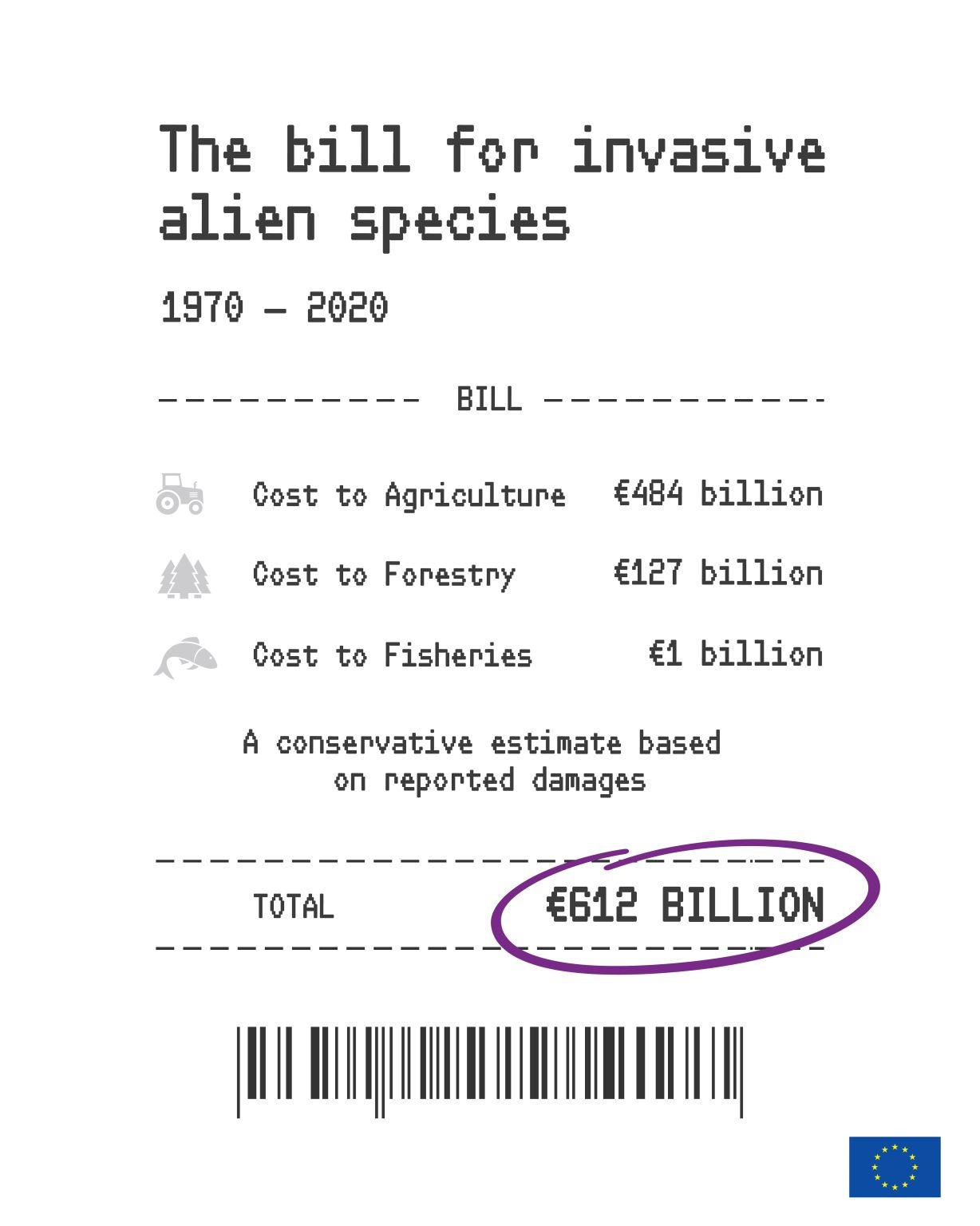
According to a study highlighted by the European Commission, invasive species cost agriculture, forestry and fisheries worldwide an estimated €612 billion between 1970 and 2020. Damaged crops and forests, weakened flood defences and native wildlife pushed aside all come at a cost. Prevention, early detection and rapid response remain the most cost-effective tools, but they only work with people on the ground.
Hunters at work, at little or no cost to society
Across Europe, hunters contribute their time, knowledge and equipment, largely on a voluntary basis, to keep invasive species in check.
Egyptian goose
Alopochen aegyptiacaListed as an invasive species of Union concern, it spreads rapidly in north-western Europe, grazes on crops and grassland, and competes aggressively with native waterbirds.
Hunters help keep populations under control.
Muskrat
Ondatra zibethicusIts burrows destabilise dikes, riverbanks and flood-protection infrastructure.
Hunters and trappers work alongside water and environmental authorities to protect wetlands and the people who depend on them.
American mink
Neogale visonA generalist predator added to the EU list in 2025, it threatens ground-nesting birds and other vulnerable wildlife.
Targeted trapping by hunters helps protect native species.
These efforts bring clear benefits to society: lower costs for farmers and public authorities, safer infrastructure and healthier ecosystems.
Working together
FACE has long supported hunters' role in tackling invasive species, from the European Code of Conduct on Hunting and Invasive Alien Species, developed with the Bern Convention and IUCN, to the many projects showcased in the FACE Biodiversity Manifesto. To be effective, policies on invasive species need sustained resources, practical rules and the active involvement of those already managing these species on the ground: hunters.
Source of figures: Turbelin et al. (2024), “Biological invasions as burdens to primary economic sectors”, Global Environmental Change 87, as reported by the European Commission. Graphic: European Commission.