

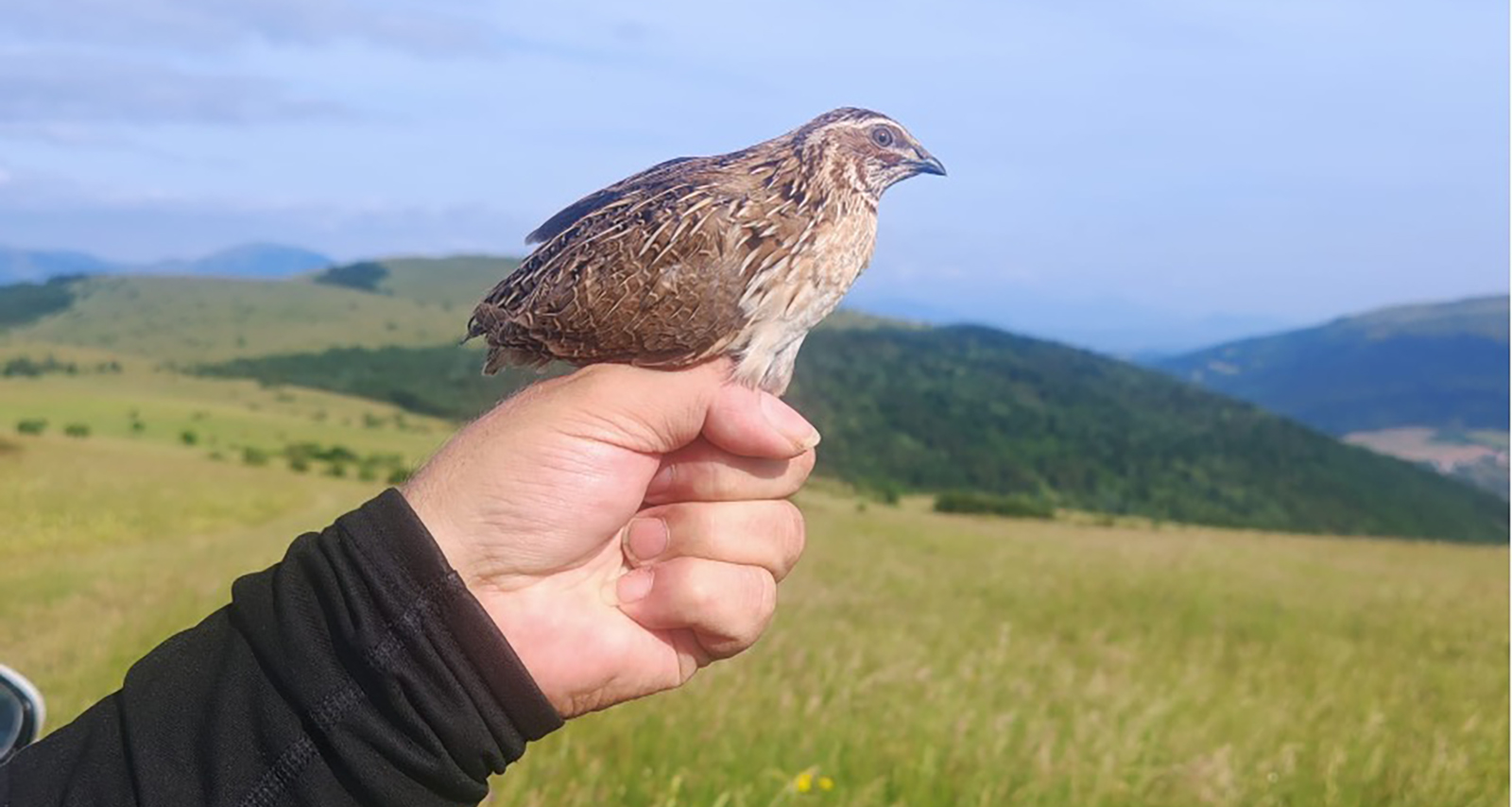
20 Oct 2026 Success – First ever international dedicated Quail monitoring carried out by FACE Members!
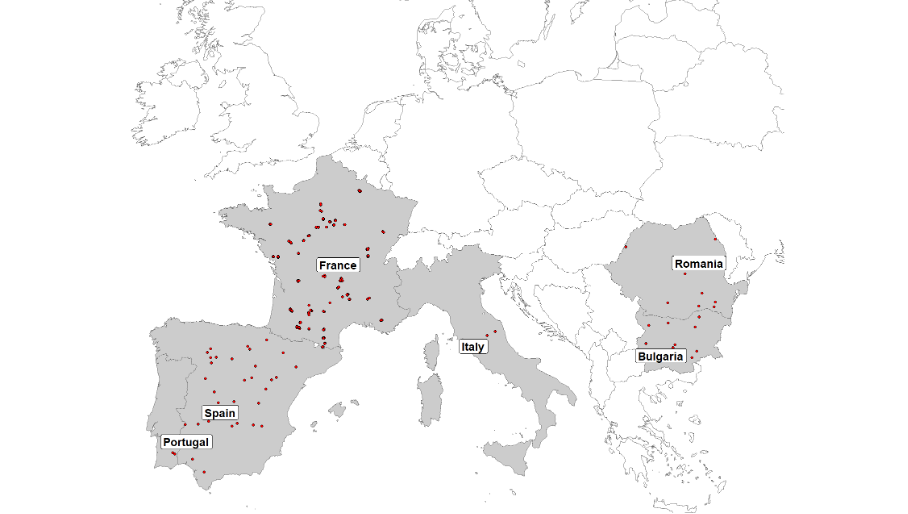
On 2 and 6 June 2026, 6 FACE Members (in Spain, France, Portugal, Italy, Bulgaria and Romania*) successfully conducted the first simultaneous Common Quail monitoring led by European hunters, using a recognised monitoring methodology specifically designed for the Quail.
Such a methodology (SEC) was specifically designed for Quails to improve monitoring, because multi-species passive monitoring methods commonly used to monitor common birds in the EU lead to an underestimation of the presence of quails. By combining passive and active monitoring, as well as ringing, the SEC methodology overcomes the barriers and limitations of the passive methods.
The following map shows the countries participating, and the sites monitored (when known at this stage).
Some early news
In Spain, where the application of the SEC methodology is most advanced, a total of 31 study sites have been surveyed, conducting the SEC methodology in a total of 310 points, 130 on 2 June and 180 on 6 June. In total, 250 quails have been detected through passive methods and 654 using the active one (playback calls), capturing 105 birds which were ringed.
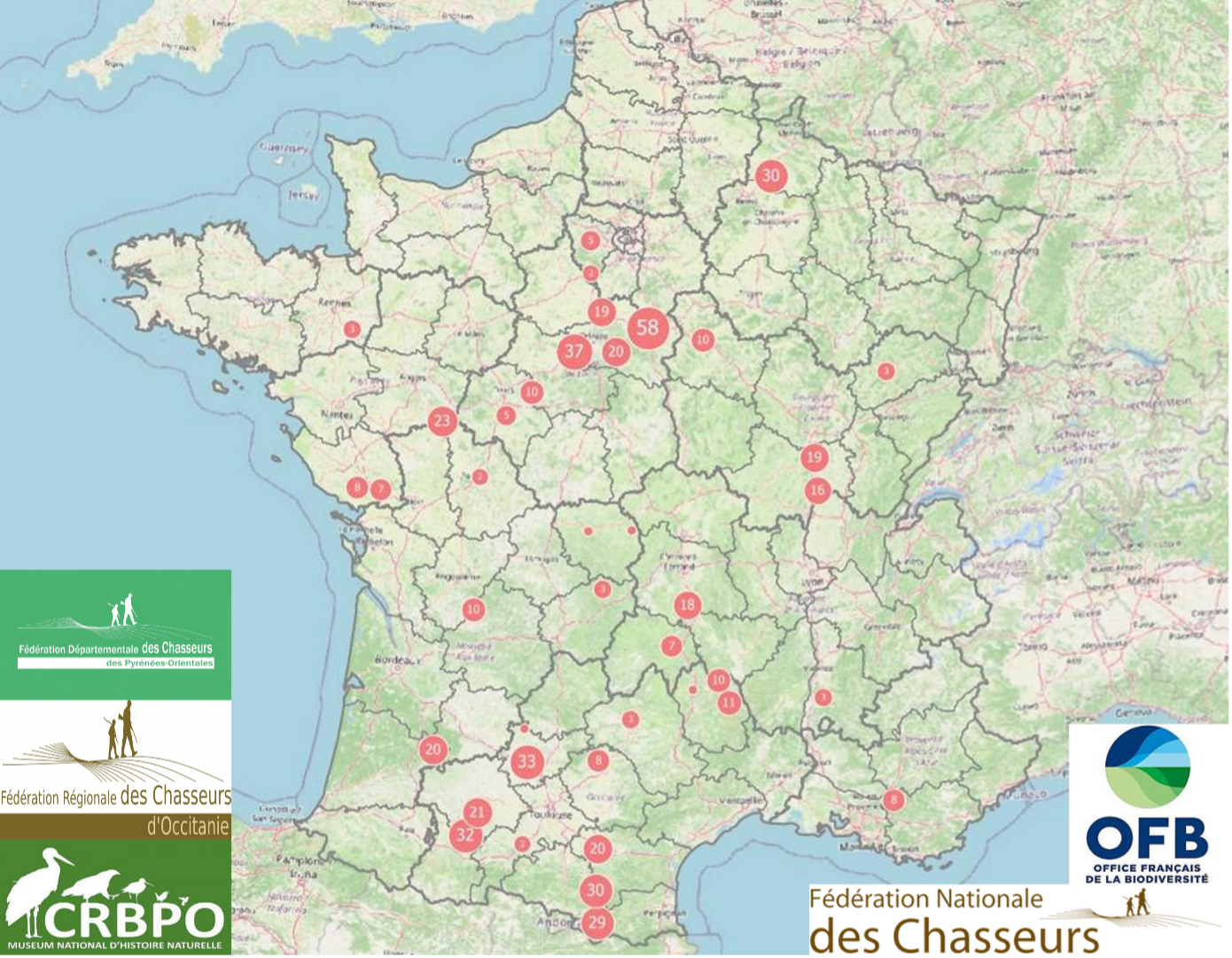
In France, the Quail monitoring project led by the FDC 66, the FRC in Occitanie, the CRBPO, with funding from the OFB and the FNC is ongoing. So far, 2,896 Quails have been detected, including 646 spontaneously (passively) detected and 2,004 actively detected, highlighting that only around 25% Quails were detected passively. The data extracted for the two days of coordinated international monitoring on 2 and 6 June shows that 327 and 222 monitoring sessions took place on these dates, respectively. On 2 June, 193 Quails were detected passively, and 423 actively, resulting in 119% more Quails being detected actively. On 6 June, 150 Quails were detected passively, and 295 actively, resulting in 97% more Quails being detected actively. In total, 140 Quails were ringed.
In Italy, the Italian Hunting Federation (FIDC) has successfully managed to conduct monitoring following the SEC methodology on 2 sites on 2 June and on 3 sites on 6 June, resulting in 218 sample points monitored. On 2 June, 21 Quails were detected passively, and 34 actively, resulting in 62% more Quails being detected actively. On 6 June, 41 Quails were detected passively, and 74 actively, resulting in 80% more Quails being detected actively. In total, 10 Quails were ringed.
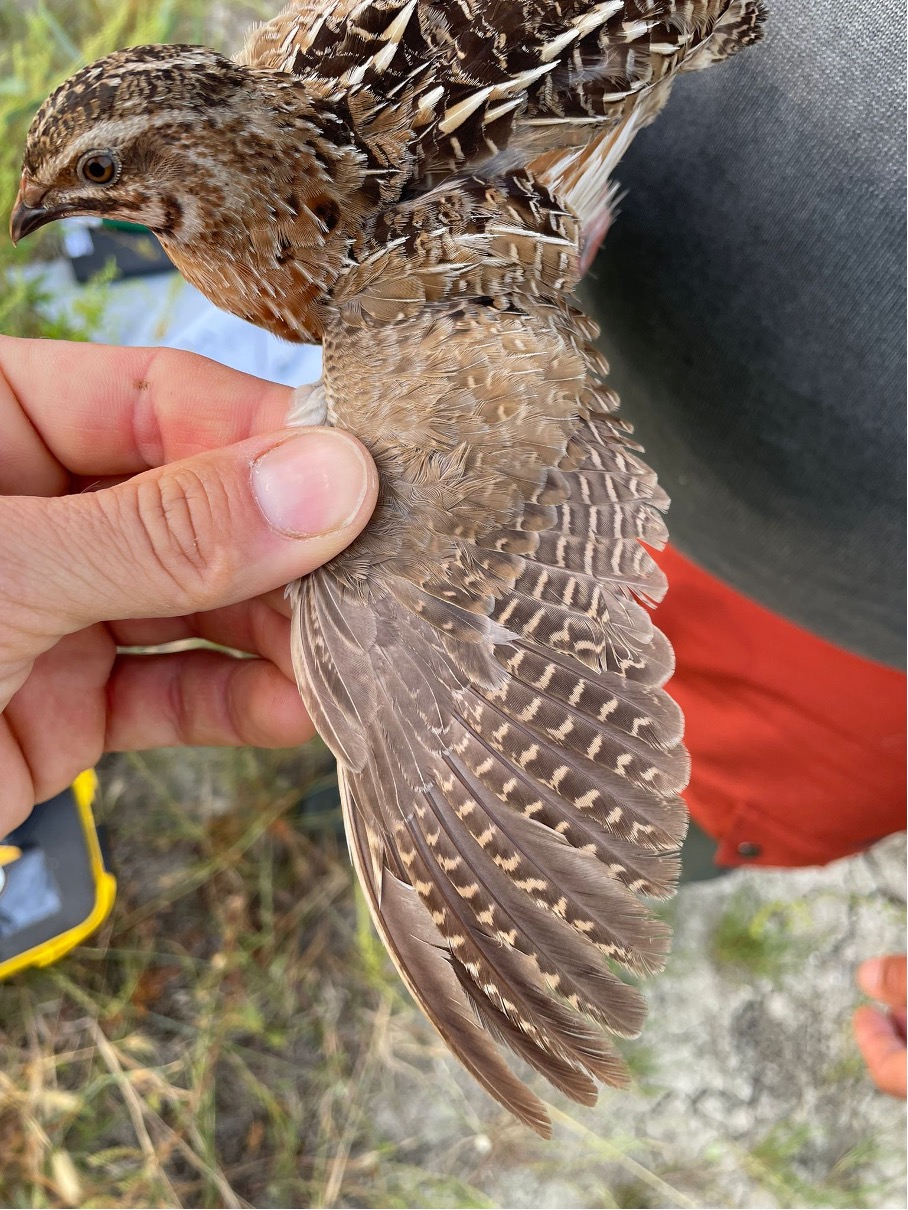
In Bulgaria, the Union of Hunters and Anglers in Bulgaria (UHAB) has also been successful in the field with monitoring conducted over 12 plots and 6 different dates, resulting in 20 monitoring samples. On 2 June 2026, 5 plots were monitored, and 8 on 6 June. In total 244 Quails were detected passively, and 339 actively, resulting in 39% more Quails being detected actively.

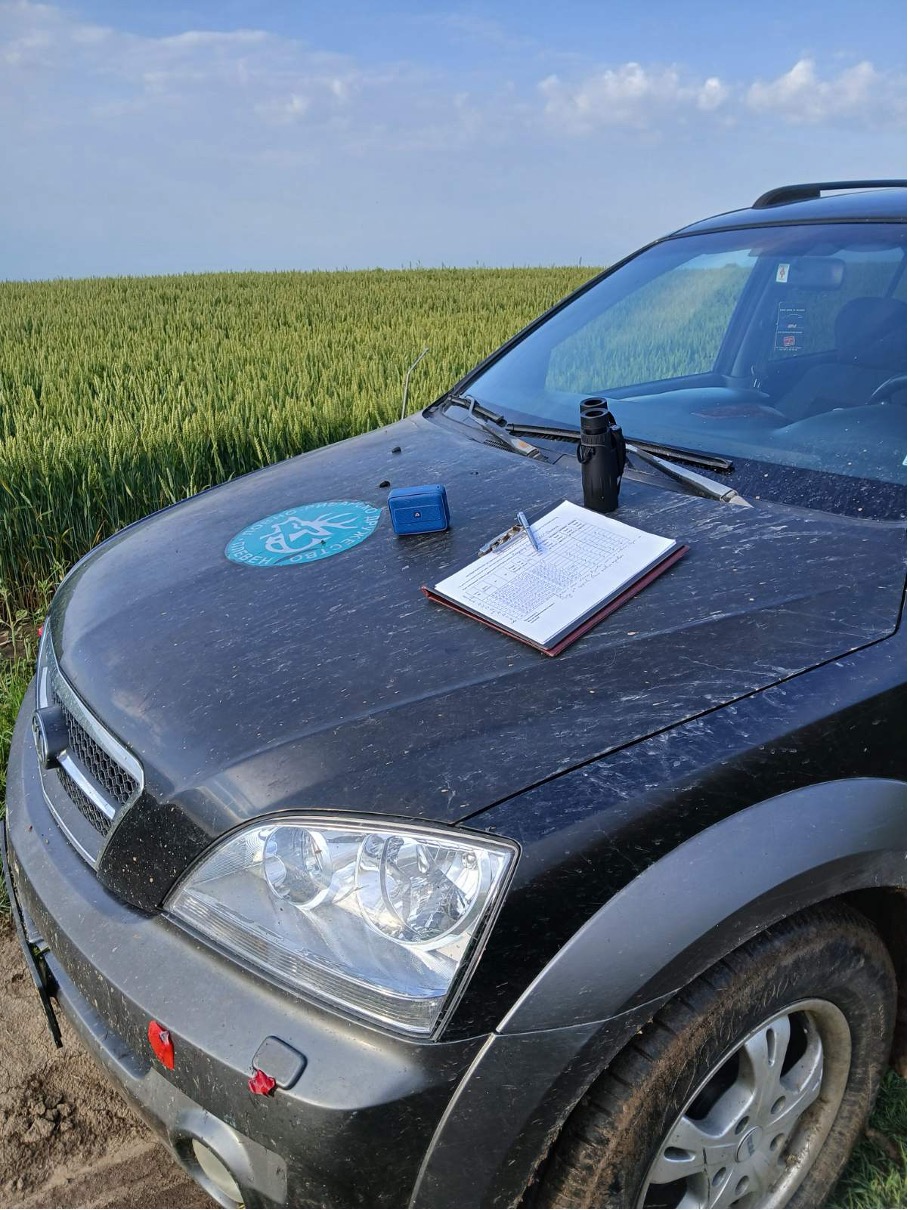
In Romania, 8 sites (of 10 sample points as per the SEC method) have been monitored once a week over 13 weeks, therefore covering June, July and August. This dataset is still under analysis.
In Portugal, monitoring with the SEC methodology took place at one pilot site.
The data collected so far shows that only around 80% more Quails are detected with the SEC methodology than through passive methods. This highlights the effectiveness of active methods, and in line with scientific studies that warn that passive methods, such as those used so far to guide initial work on the development of the European Quail Adaptive Harvest Management, underestimate the number of individuals, which can lead to taking incorrect measures.
Now, the data collected during the simultaneous dates will be further compiled and analysed to produce the first data point, starting the future series of coordinated international Quail monitoring.
Following this successful first round, we now expect higher participation next year, by further expanding the use of the SEC methodology.