
14 Oct 2026 Tradition, Selectivity and Sound Science: What the Conseil d’État Confirmed on Pantes
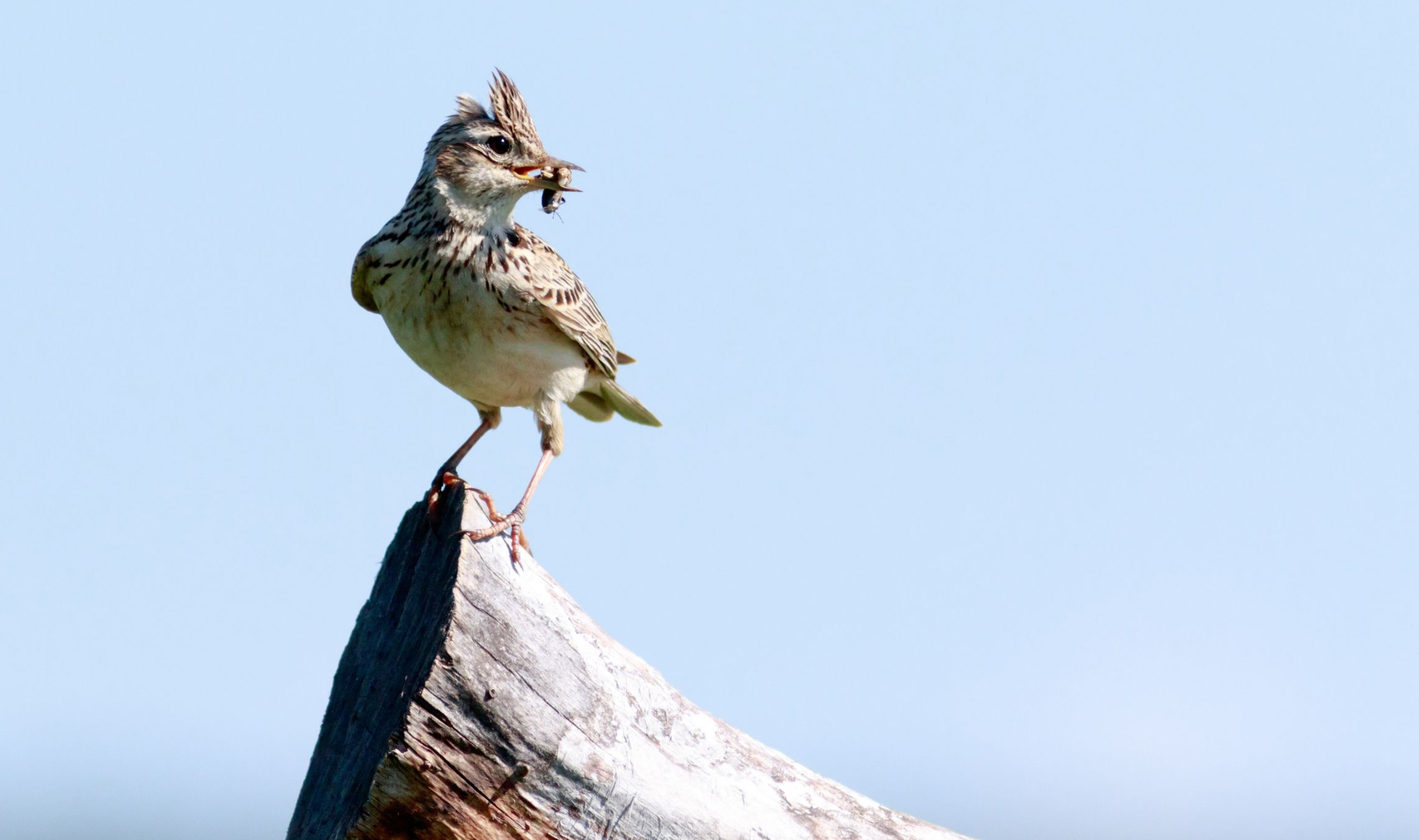
FACE welcomes the recent French Conseil d'État's decision rejecting the appeals brought by the LPO and One Voice against the administrative acts authorising the traditional capture of skylarks using pantes in the departments of Landes, Pyrénées-Atlantiques, Gironde and Lot-et-Garonne.
Pantes are traditional horizontal nets used to capture skylarks. Operated from a concealed hut, the system uses calls and a live decoy to attract birds to a prepared trapping area, where two horizontal nets are triggered to close over them. The practice requires significant knowledge of bird behaviour and the maintenance of specialised hunting sites.
This traditional hunting method has been subject to judicial scrutiny for years in France because of its alleged lack of compliance with Article 9 of the Birds Directive. The judgment provides important clarification on the application of Article 9 to this traditional hunting practice.
The cultural value beyond harvesting
In line with the Court of Justice of the EU’s jurisprudence, the Conseil d’État recalled that the traditional character of a practice is not, on its own, sufficient to justify a derogation under Article 9. However, the judgment underlines that pantes are not merely a means of harvesting skylarks, but a traditional practice with important cultural and recreational value, offering a particular relationship with nature that shooting does not provide, and involving the maintenance of hunting sites and a detailed understanding of bird behaviour. The judgment therefore acknowledges that traditional hunting methods have a cultural significance and purpose that cannot simply be reduced to the taking of birds.
The importance of distinguishing breeding and wintering populations
A second important aspect of the judgment concerns the scientific assessment of skylark populations. Referring to the findings of NADEG (the EU Expert Group on the Birds and Habitats Directives), the Court recognised the importance of distinguishing between breeding and wintering populations. The vast majority of captures authorised by the contested orders concern wintering or passage birds rather than skylarks breeding in France. The judgment therefore confirms that conservation assessments must focus on the population actually affected by the practice and not solely on national breeding populations.
A highly selective method
The decision also highlights the high degree of selectivity of pantes. Selectivity is a fundamental requirement under Article 9 of the Birds Directive. The French authorities demonstrated that pantes are specifically designed to target skylarks and are operated under strict regulatory controls and capture limits.
By rejecting the challenges against the 2025 authorisations, the Conseil d'État confirmed that the conditions for the derogation were met, including the requirement that captures take place under strictly controlled conditions and in limited numbers.
“For those who wanted to see traditional hunting practices disappear for good, we’ve chosen patience, hard work, and evidence-based action. Since 2021, following each unfavorable decision, we have had to improve the legal framework, strengthen its justification, carry out further experiments, improve monitoring and provide the scientific evidence required. Now that this collective effort by the FNC, the federations concerned and the Ministry’s departments is beginning to bear fruit, we must continue to defend our traditional hunting practices, which are so precious to our local identities, with pride and determination. I am delighted for the hunters who keep these traditions alive, and for the preservation of this cultural heritage!”
Willy Schraen, President of FNC
“The recognition of the cultural value that a traditional hunting method has is absolutely vital, provided that the other requirements set out in the Birds Directive are fulfilled, as is clearly the case here. For the hunting community, the Conseil d'État’s reasoning that traditional methods may pursue legitimate cultural and recreational objectives beyond the mere taking of birds represents an important development. The judgment acknowledges that the use of “pantes” is associated with a particular relationship with nature, which clearly shows that tradition and sound science can go hand in hand, keeping alive socio-cultural practices that bring communities together around nature across generations.”
Dr Laurens Hoedemaker, President of FACE
Tradition, sélectivité et rigueur scientifique : ce que le Conseil d'État a confirmé sur les pantes
FACE se félicite de la récente décision du Conseil d’État français rejetant les recours introduits par la LPO et One Voice contre les actes administratifs autorisant la capture traditionnelle des alouettes à l’aide de pantes dans les départements des Landes, des Pyrénées-Atlantiques, de la Gironde et du Lot-et-Garonne.
Les pantes sont des filets horizontaux traditionnels utilisés pour capturer les alouettes des champs. Opéré depuis une cabane dissimulée, ce système utilise des cris et un appelant vivant pour attirer les oiseaux vers une zone de piégeage préparée, où deux filets horizontaux se referment sur eux. Cette pratique exige une connaissance approfondie du comportement des oiseaux et l’entretien de sites de chasse spécialisés.
Cette méthode de chasse traditionnelle fait l’objet d’un contrôle judiciaire depuis des années en France, en raison de son non-respect présumé de l’article 9 de la directive Oiseaux. L’arrêt du Conseil d’État apporte des éclaircissements importants sur l’application de cet article à cette pratique de chasse traditionnelle.
La valeur culturelle au-delà de la simple chasse
Conformément à la jurisprudence de la Cour de justice de l’Union européenne, le Conseil d’État a rappelé que le caractère traditionnel d’une pratique ne suffit pas, à lui seul, à justifier une dérogation au titre de l’article 9. Toutefois, l’arrêt souligne que la chasse traditionnelle à l’alouette n’est pas un simple moyen de chasser cette espèce, mais une pratique traditionnelle revêtant une importante valeur culturelle et récréative. Elle offre un rapport particulier à la nature, que la chasse à tir ne permet pas, et implique l’entretien de sites de chasse ainsi qu’une connaissance approfondie du comportement des oiseaux. L’arrêt reconnaît donc que les méthodes de chasse traditionnelles possèdent une signification et une finalité culturelles qui ne sauraient se réduire à la seule capture d’oiseaux.
L’importance de distinguer les populations nicheuses et hivernantes
Un deuxième aspect important de l’arrêt concerne l’évaluation scientifique des populations d’alouettes des champs. Se référant aux conclusions du NADEG (Groupe d’experts de l’UE sur les directives Oiseaux et Habitats), la Cour a reconnu l’importance de distinguer les populations nicheuses des populations hivernantes. La grande majorité des captures autorisées par les arrêtés contestés concernent des oiseaux hivernants ou de passage, et non des alouettes des champs se reproduisant en France. L’arrêt confirme donc que les évaluations de conservation doivent porter sur la population réellement affectée par la pratique et non uniquement sur les populations nicheuses nationales.
Une méthode hautement sélective
La décision souligne également le haut degré de sélectivité du système des pantes. La sélectivité est une exigence fondamentale au titre de l’article 9 de la directive Oiseaux. Les autorités françaises ont démontré que les pantes sont spécifiquement conçues pour cibler les alouettes des champs et sont utilisées dans le cadre de contrôles réglementaires stricts et de limites de capture.
En rejetant les contestations des autorisations de 2025, le Conseil d’État a confirmé que les conditions de la dérogation étaient remplies, notamment l’exigence que les captures aient lieu dans des conditions strictement contrôlées et en nombre limité.
« Pour ceux qui souhaitaient la disparition définitive des pratiques de chasse traditionnelles, nous avons opté pour la patience, le travail acharné et une action fondée sur des preuves. Depuis 2021, suite à chaque décision défavorable, nous avons dû améliorer le cadre juridique, renforcer sa justification, mener des expérimentations supplémentaires, améliorer le suivi et fournir les preuves scientifiques requises. Maintenant que cet effort collectif de la FNC, des fédérations concernées et des services du ministère commence à porter ses fruits, nous devons continuer à défendre avec fierté et détermination nos pratiques de chasse traditionnelles, si précieuses pour nos identités locales. Je me réjouis pour les chasseurs qui perpétuent ces traditions et pour la préservation de ce patrimoine culturel ! »
Willy Schraen, président de la FNC
« La reconnaissance de la valeur culturelle d’une méthode de chasse traditionnelle est absolument essentielle, à condition que les autres exigences de la directive Oiseaux soient respectées, comme c’est manifestement le cas ici. Pour la communauté cynégétique, le raisonnement du Conseil d’État selon lequel les méthodes traditionnelles peuvent poursuivre des objectifs culturels et récréatifs légitimes, au-delà de la simple capture d’oiseaux, constitue une avancée majeure. L’arrêt reconnaît que l’usage des « pantes » est associé à un rapport particulier à la nature, ce qui démontre clairement que tradition et rigueur scientifique peuvent coexister, perpétuant ainsi des pratiques socioculturelles qui fédèrent les communautés autour de la nature, de génération en génération. »
Dr Laurens Hoedemaker, président de FACE