
29 May 2026 First simultaneous Common Quail monitoring led by European hunters
FACE Members from six European countries — Spain, France, Portugal, Italy, Bulgaria and Romania — will carry out the first simultaneous scientific survey of the Common Quail, a pilot project aimed at obtaining accurate data on the population status of the species across Europe.
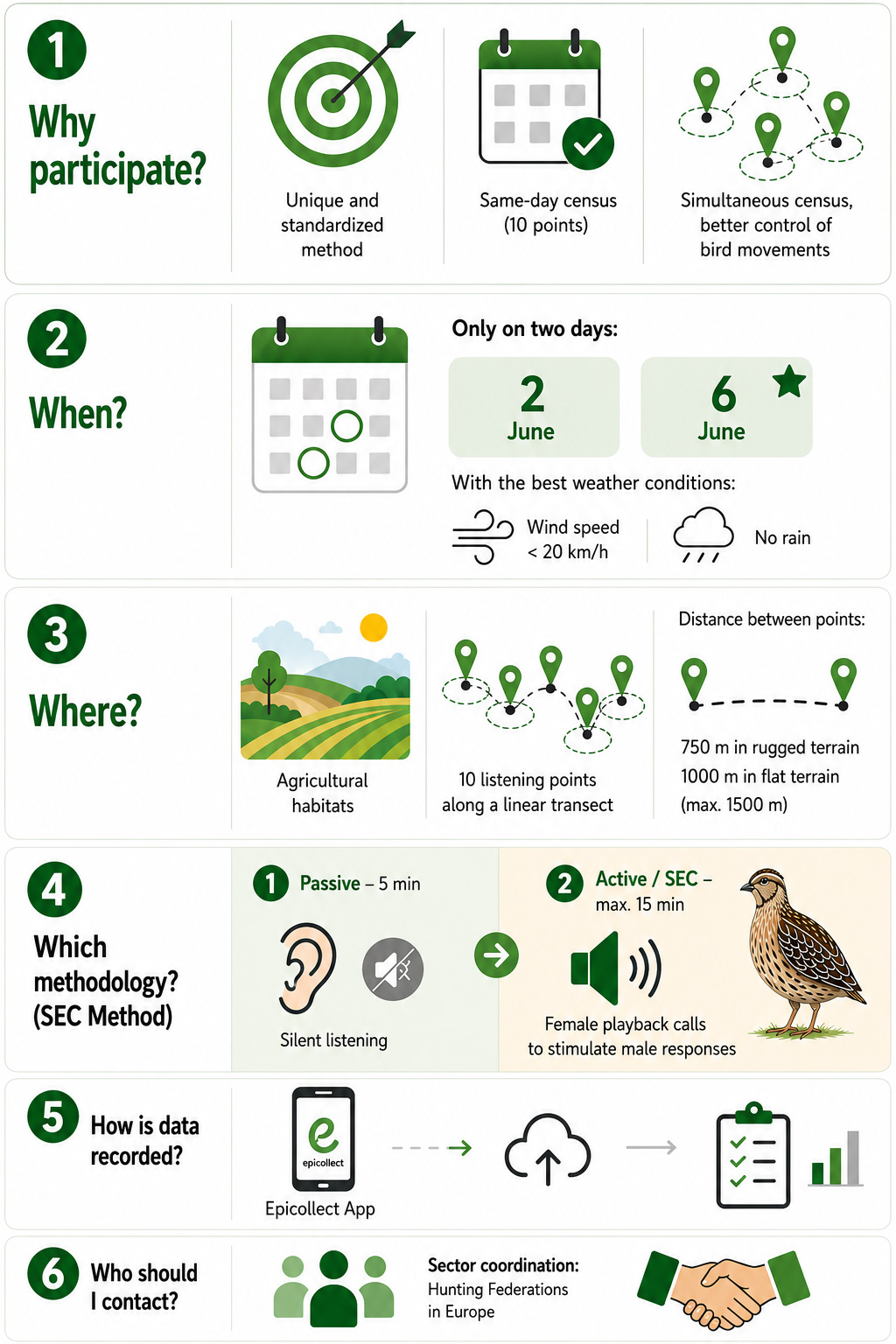
The “European Quail Monitoring Days” will take place on 2 and 6 June, following the SEC methodology (Specific Quail Monitoring), designed by the University of Barcelona and implemented in recent years at large scale in Spain within the Spanish “Coturnix” project. This methodology will be expanded to Portugal, Italy, Bulgaria and Romania, while French hunters, in partnership with the National Museum of Natural History (MNHN), have for several years been running a large-scale monitoring programme (over 3,000 birds ringed annually) specifically designed for the Quail in France, which also combines passive and active listening with ringing, with some structural differences in methodology.
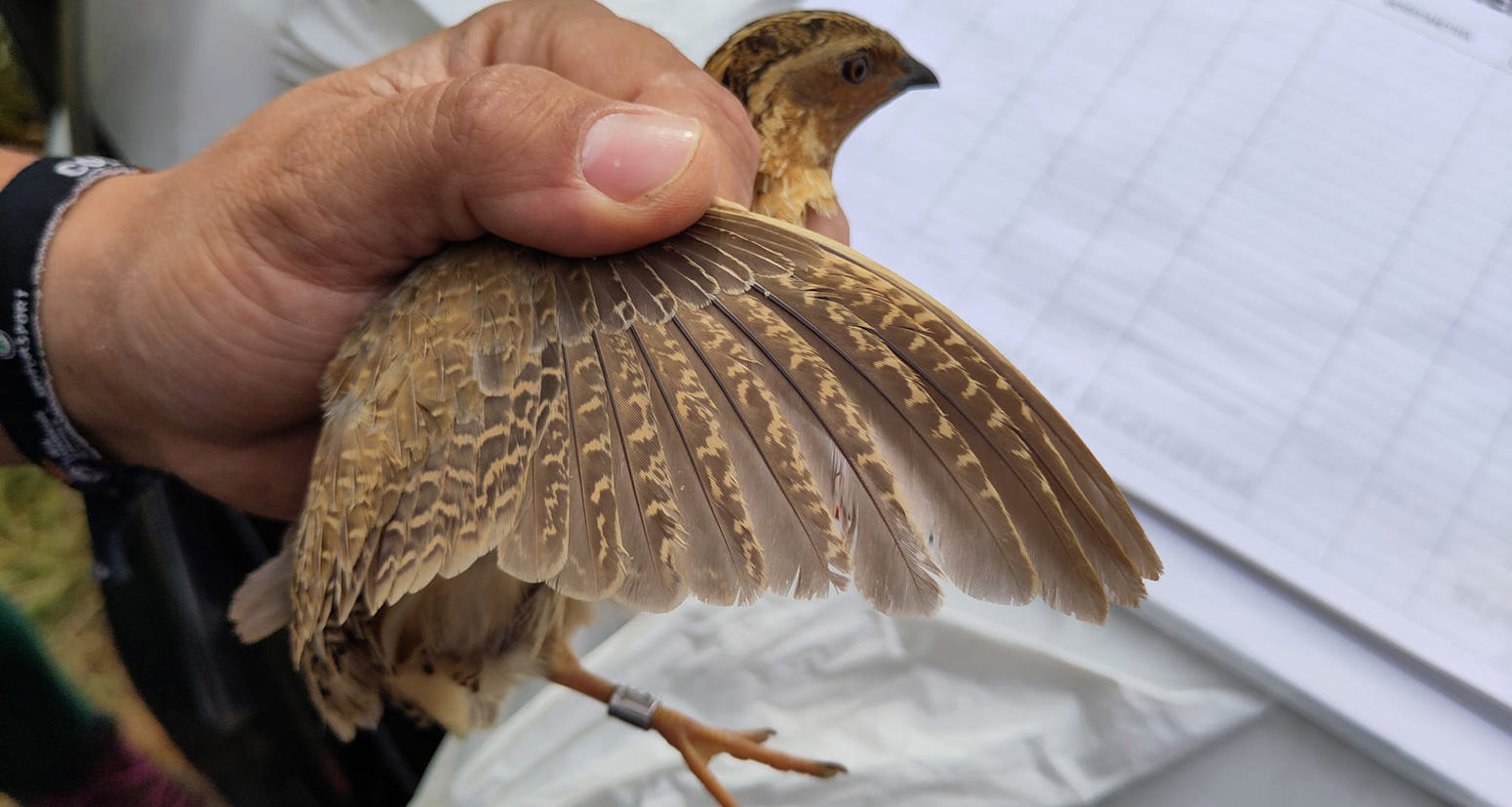
The multi-species passive monitoring methods commonly used to monitor common birds in the EU have been repeatedly shown by scientific studies to underestimate the presence of quails due to their particular eco-ethology, migratory behaviour and complex socio-sexual system. As a result, passive methods may lead to incorrect management decisions regarding the species.
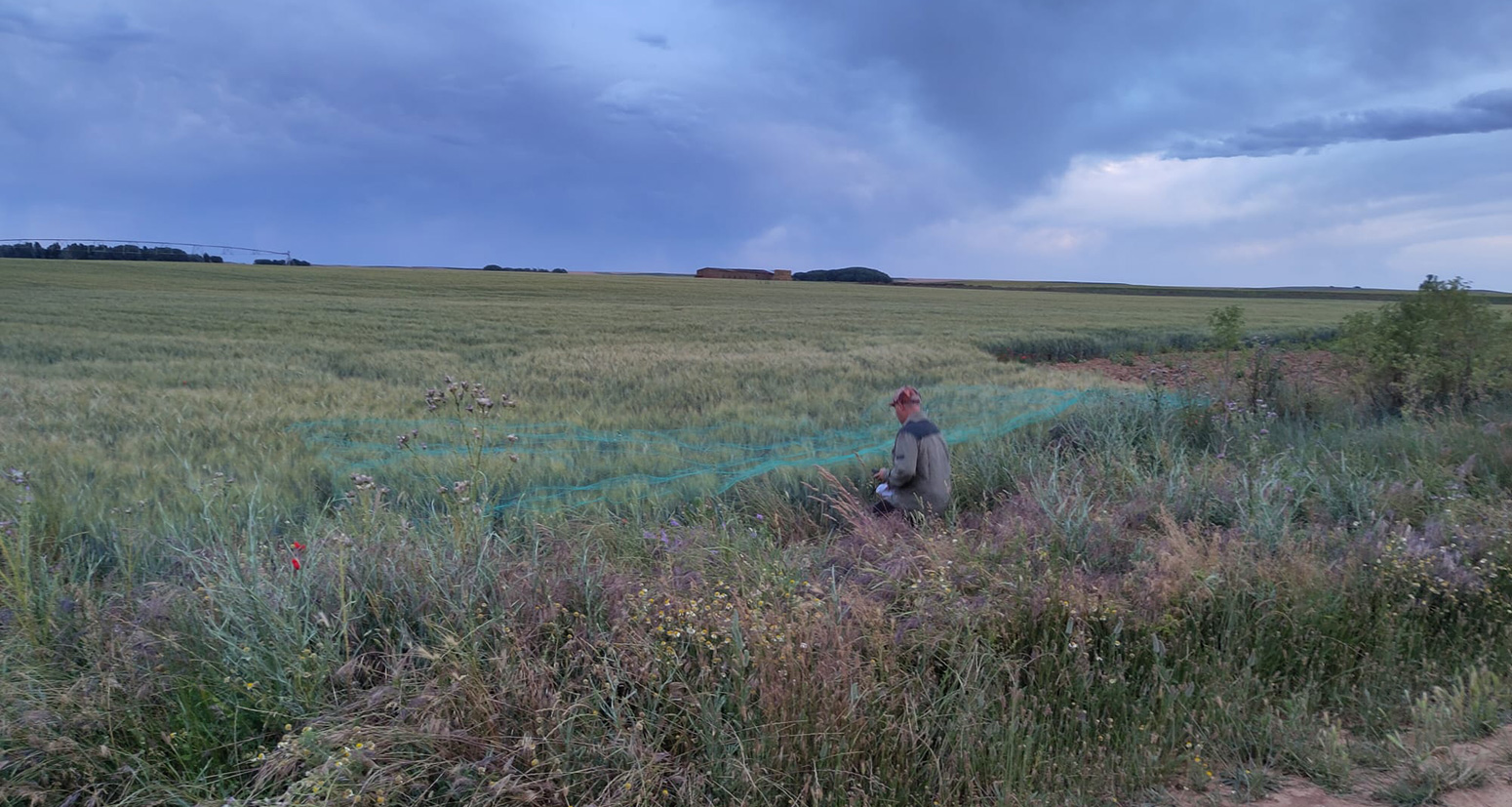
This active method used in this coordinated Quail monitoring (SEC) overcomes the barriers and limitations of the passive methods by combining passive and active monitoring, and an additional step of catching and ringing Quails which allows to detect males that are not actively calling.
The Common Quail is a bird closely associated with agricultural habitats, spending much of its time in dense vegetation and cover, which makes it difficult to observe directly. In addition, quails are constantly moving birds, making a simultaneous survey the best way to obtain the most reliable information about the status of their populations.
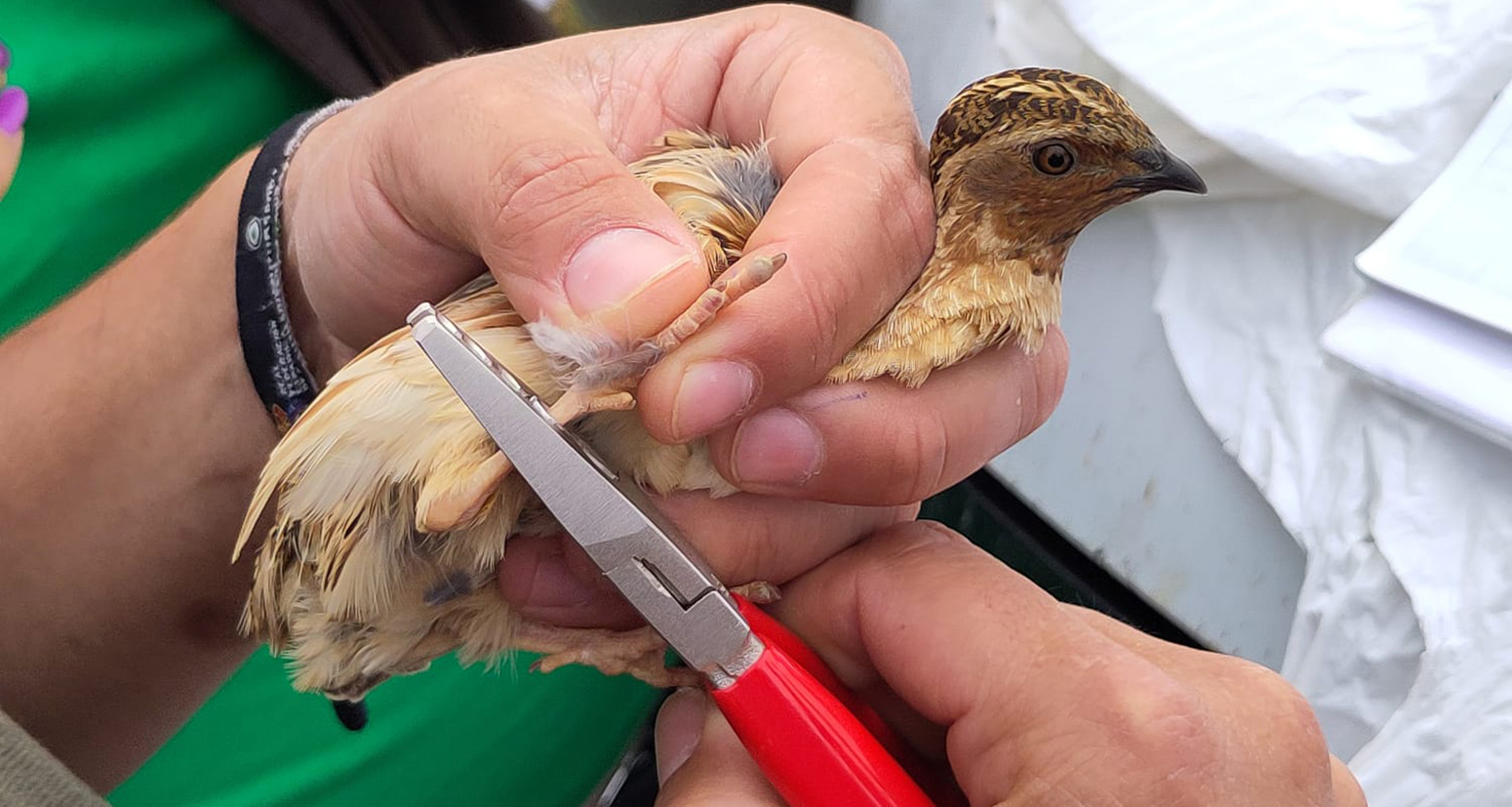
In addition to simultaneously assessing quail presence and density, the European Quail Monitoring Days aim to expand this specific methodology on a large scale throughout Europe and along migratory flyways in the coming years, while also obtaining valuable data that can be used in the current context of adaptive hunting management and population modelling, at flyway scale level.
This initiative comes at a crucial moment for the species, as its status is currently being evaluated by the European Commission which recognises a lack of knowledge regarding the true status of its populations. Therefore, it is essential to obtain verifiable and reliable information through the implementation of a specific active method such as SEC.
Hunting federations of the different countries, with the involvement and support of the European Federation for Hunting and Conservation (FACE) and Fundación Artemisan, will conduct surveys on the established dates following the guidelines and methodology set by Fundación Artemisan’s scientific team through a single standardised method.
Following the Coturnix Project, which has served as an example, European hunters are now expanding best practice monitoring for the Quail, demonstrating commitment to conservation and science-based hunting management, which is essential to guarantee the future of hunting activities.
FACE encourages other key breeding countries for the Quail to follow this initiative and join the monitoring efforts. This will help overcome the current lack of knowledge and support management decisions for this emblematic and fascinating species.
National hunting organisations involved:
- Spain: Royal Spanish Hunting Federation – RFEC
- France: French National Hunters’ Federation – FNC
- Portugal: Portuguese Federation of Hunting – FENCACA
- Italy: Italian Hunting Federation – FIDC